Categories
theatre

The Human Voice – Harold Pinter Theatre

Ruth Wilson in The Human Voice

Ivo van Hove’s production of Hedda Gabler played on National’s Lyttelton stage to considerable acclaim in 2016, so the news of another collaboration between the garlanded director and lead Ruth Wilson sets high expectations. Unfortunately, this production of Jean Cocteau’s often-adapted 1930 monodrama struggles to fulfil them.

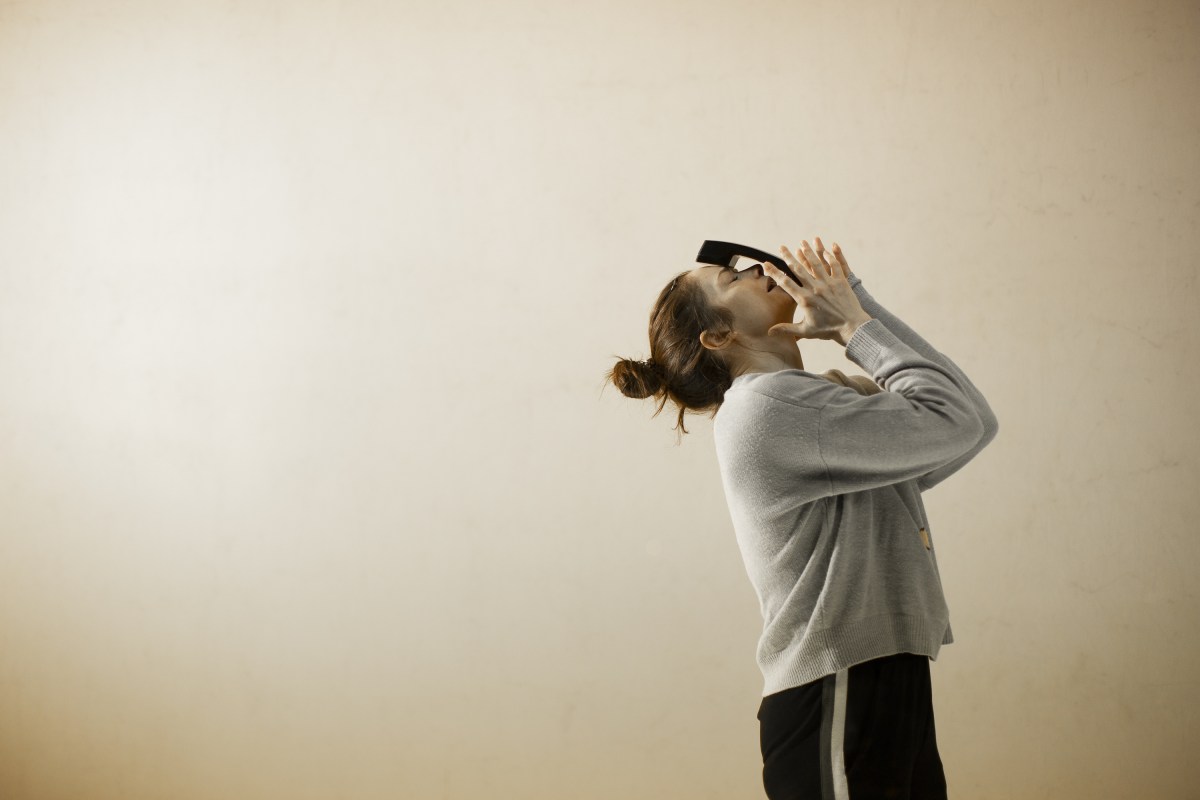
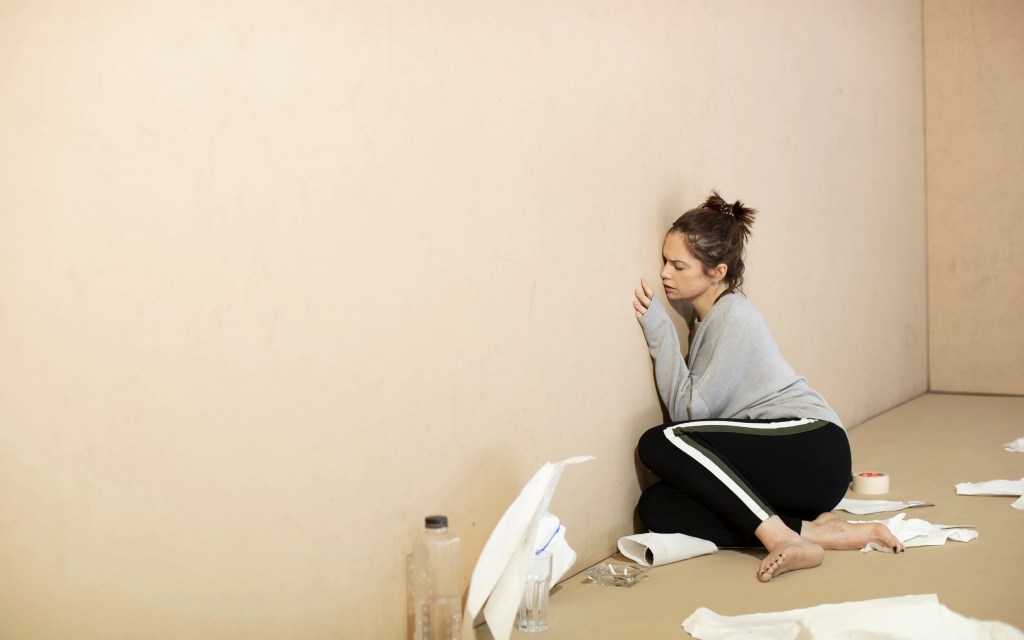
Like their Hedda, also designed by Jan Versweyveld, The Human Voice plays in a near-empty void of white space. Hedda Gabler’s set had the sparsest furnishings of a modern home, punctuated only with a few objects of either essential function or immense significance (a gun, flowers, an upright piano). The Human Voice pares things back even further. Wilson is placed into a vacant white box, which she sometimes brings props into, yet unlike before the effect is not of a gaping emptiness, but a claustrophobic, restrictive container. We see Wilson only through a window, so she is letterboxed in widescreen, hemmed in, her suppressed emotions soon filling the space. She seems trapped behind the glass – like it is a petri dish, a display case, or even as if she is under the slide of a microscope. Yet despite Wilson’s best efforts, this suffuses an air of cold, scientific sterility into the play’s atmosphere.

Peering through the glass, there is an inescapable and palpable sense of voyeurism, and surely van Hove knows this. However, he does little to challenge us or problematise our presence. The show casts us as curtain-twitching onlookers across the street – or from another nearby tower block. (We realise that here she is high up once she jumps to her death.) Yet we hear her only down the telephone, almost as if we are her lover – hearing her often ASMR-like amorous overtures down the phone, flickering in an instant between dismissive and desperate. Thus, we are both sought out and blamed.

Perhaps the ethical complications van Hove seeks to entertain are stymied by the unfortunate fact that the show offers fairly few theatrical pleasures. Though fans of Wilson will relish the chance to see her on stage again, the production is languorous and lacks energy. Were we really gazing in through her window, I doubt we would carry on watching. Though running at only 70 minutes, the sheer aesthetic austerity of the play – a deliberate reflection of her mental state though it is – tests one’s endurance a little. The greatest variation comes from the terrific sound design, the lighting swelling from cool white to a pungent yellow, or the occasional opening of the window. Any attempt to goad us into guilt about what we are watching would rely on us being problematically riveted, rather than somewhat indifferent.
Ruth Wilson in The Human Voice

The main source of life in the play is music – some diegetic, some as additional soundtrack. At the start of the play, she listens to Arlo Parks’ ‘Hope’, with its recurring refrain ‘You’re not alone, like you think you are’. As a statement on how technology connects, it seems logical, while it also creepily suggests our presence as the voyeuristic audience. It also foreshadows, with tragic irony, the woman’s eventual lonely fate. Later, her melancholy is telegraphed by the onset of Radiohead’s ‘How to Disappear Completely’ – a gently meandering ode to dissociation, which is actually one of my favourite songs. Yet even so, here it felt like an underearned attempt to overlay emotions that we were not quite feeling – largely due to the alienation built into the design, rather than Wilson’s acting.

The track recurs through the play, its first use the most creative – though the third and final (near-complete) playthrough is the most artistically daring. Wilson plays music on her phone, dancing to Beyonce’s ‘Single Ladies’ – another song laden with an ironically literal relationship to the drama. Yet Radiohead fades in and eventually drowns it out. The music is implicitly internal – reflecting her true state of lifeless, out-of-bodily sadness. However, the effect seems too deliberately composed and imposed, a shortcut to emotion that does not fully satisfy. The third time ‘How to Disappear Completely’ plays, Wilson sits inertly against the back wall. She does not move a muscle for a full four minutes, in a daring gambit. Yet, by this point, even a track as liltingly beautiful as this one has started to feel cheapened and overused.

At the play’s conclusion, when Wilson’s character dons an electric blue evening gown and pulls open her apartment’s sliding window to jump to her death, van Hove and Versweyveld’s sudden plunge into darkness is almost immediately interrupted by a blast of Miley Cyrus’ song ‘Wrecking Ball’. The choice is downright bizarre and feels crassly misjudged, disconcertingly dissonant with the play’s previous aesthetic of beige severity. It feels like a glib reaction to a woman’s suicide, especially when she acts not out of an excess of passion and spurned rage (as in Cyrus’ lines ‘I never hit so hard in love’ and ‘All you ever did was wreck me’) but out of a slump into deep depression.

Ruth Wilson in The Human Voice

In the scenes leading to her suicide, van Hove transposes some of Cocteau’s phone-bound dialogue into a direct audience address – which reaps some of the most effective moments of the evening. ‘I am suffering’, she tells us, and it is as if she is pleading for empathy – rather than being the subject of scrutinised, distant sympathy. She even says she knows it is difficult to keep listening. Afterwards, I wondered if many of the effects of the production are deliberately designed not for in-person thrills. Perhaps instead this version of The Human Voice should creep up on you later on. A couple of weeks on from seeing it, I find there is some truth in this, but there is so little stage action to hold on to that the specifics of the production do slide from your memory. Arguably the small creative team of van Hove, Versweyveld and Wilson are trying to show the difficulty of catching someone before they fall into depression – that such experiences (both for the sufferer and the attempted provider of support) are tiring, exhausting and sometimes even dull. In this production, as much sympathy as Wilson makes us feel, you can understand why answering the phone to her character becomes difficult – despite her pleas to be heard.

It does not help that we are so remote from her that the action fails to recruit much more than general sympathy. She is pitied rather than mourned because we rarely get the chance to ache with her. Suffering is the spectacle here; she has been placed here for our amusement, but it is not quite compelling enough for us to feel guilty about watching. In light of this, her death almost seems like she is opting out of the drama itself – realising there is no way to transcend the stage-box she has been trapped in, but that perhaps that she could deprive her observers of the ability to study her pain.

Though The Human Voice seems perfectly positioned for a free adaptation that grapples with the human cost of lockdowns, this version feels too generic, and too disinterested in the theme of isolation itself. Though the play has been advertised with the tag line ‘We’ve never been more connected. We’ve never been more alone’, we are not invited to share the woman’s plight, just to watch it – in a way that would be problematic, if it was more compelling.

The Human Voice

Written by Jean Cocteau, Adapted and Directed by Ivo van Hove, Design by Jan Versweyveld, Starring Ruth Wilson
Production Photographs by Jan Versweyveld
Reviewed 25th March 2022
Categories
theatre

Four Quartets – Harold Pinter Theatre

Ralph Fiennes in Four Quartets

‘In my beginning is my end. […] In my end is my beginning.’

From ‘Burnt Norton’, Four Quartets, by T.S. Eliot

So begins (and ends) ‘East Coker’, the second of the four poems which make up T.S. Eliot’s Four Quartets, which now receives a major solo rendition in the West End, self-directed by Ralph Fiennes. Widely considered Eliot’s last great poetic work, it is a text deeply concerned with time, beyond the limitations of human perception – influenced by traditions and texts ranging from the Pre-Socratics in Ancient Greece to Hinduism, Julian of Norwich and his own ‘anglo-catholic’ beliefs (as he self-described, without the customary capitalisation, in 1929).

Eliot writes with an after-dinner wit and a focused philosophical seriousness all at once, which is dryly conveyed by Fiennes’ manner, fluctuating between offhand and earnestly supplicatory at a moment’s notice. Lines such as ‘You say I am repeating / Something I have said before. I shall say it again. / Shall I say it again?’ epitomise this wry, almost coy, sense of profound uncertainty. Not even the order of events in time – nor the very notion of time itself – is reliable. The repetitiousness – in phrasing, but also its many alliterative echoes – create the sense of swimming through a sea of confusion, even fear. Yet there is something about the form of theatre, compared to poetry, which makes Fiennes’ Four Quartets feel more straightforward, from a defined beginning to end, even with its looping diversions, repetitions and echoes.

Ralph Fiennes in Four Quartets

I had considered the inherent linearity of theatre a couple of weeks earlier, watching (the excellent) little scratch at Hampstead Theatre. The text of Rebecca Watson’s novel is arguably ergodic – a term used particularly in relation to ‘cybertexts’, generally characterised by a difficulty built into in reading them. Effort is required in finding a path through the text. There might not be a definite order, its typesetting and printing deliberately obstructing its would-be reader. In little scratch – a far more reader-friendly version of this form than some – this meant different phrases scattered across the page – simultaneous yet separate, showing rapid overlapping thoughts and external stimuli. One of the few aspects lost its very faithful conversion to stage by adaptor Miriam Battye and director Katie Mitchell was this inherent formal uncertainty. The challenge of how to read (and speak) the text was tried and tested in the rehearsal room in advance – making the experience of watching far more passive by comparison.

Four Quartets is also concerned with paths and journeys. In ‘Burnt Norton’, the first of the four sections (published separately over six years, before being collected together in 1943), Eliot opens by considering the ‘passage we did not take’ before moving through a rose garden. In the final poem, ‘Little Gidding’, he contemplates ‘the route you would likely take / From the place you would likely come from’, before ending by ‘arriv[ing] where we started’. Not only – as is often examined – is Four Quartets fascinated by beginnings and endings, but passing between them is also a vexed, hypothetical, elusive matter. It seems somewhat antithetical to the blurred distinctions of beginning and end for the piece to finish with applause and bowing – those familiar signifiers of finality. Perhaps it was this desire to avoid the formal cliches of theatre that inspired the production’s decision not to dim the house lights for several minutes into the play.

Yet, as little scratch transformed into something more linear and external when placed on stage, Four Quartets also shifts into a far more linear work in Ralph Fiennes’ performance. It is not that Eliot’s poems are to be thought of as formally non-linear themselves. Giorgio Agamben’s definition of poetry as having ‘the possibility of enjambment’ implicitly argues that a poem’s fundamental property – differentiating it from all other forms – is its lineation. With the exception of some reverse poems and experiments in ‘cybertext’, the form is defined by downward movement. Even the historicist mode of literary criticism commonly applied to Eliot is steeped in cause and effect, and the linear narrative of Eliot’s own life. His conversion to Christianity is a dominant framework for interpreting his developing poetic style (especially compared to the avowed atheism of The Waste Land and ‘The Love Song of J. Alfred Prufrock’).

However, a reader of Eliot is certainly not as constrained as a viewer is – free to skip back, retrace the logic of Eliot’s circular arguments, or compare repeated images. In an audience, we have no choice but to let the words wash over us; there is no going back, the performance prioritising our feelings over the possibility of a particularly detailed intellectual engagement. Though Fiennes never rushes the verse, delivering it with a finely tuned, methodical intensity, there is little space to think about the words for more than a moment, for fear of missing what comes next.

Ralph Fiennes in Four Quartets

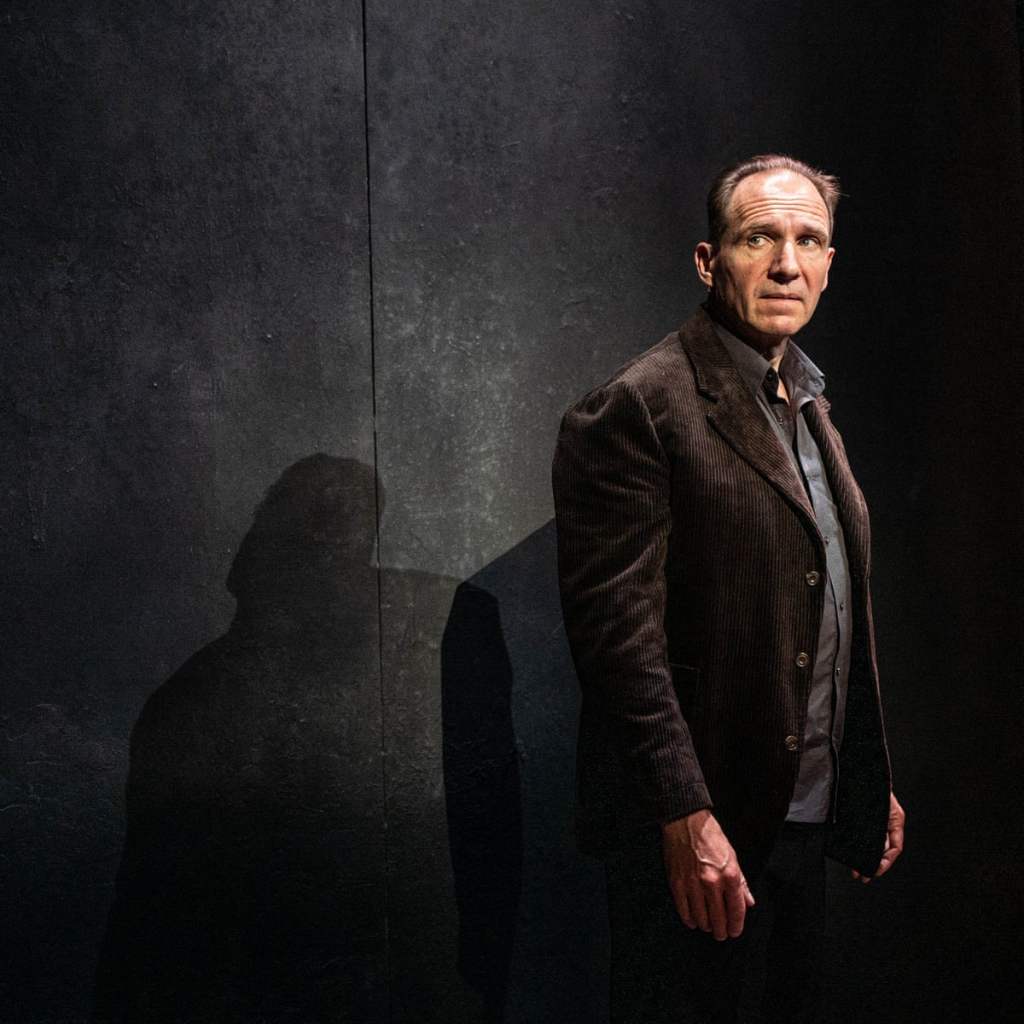
Fiennes – as both performer and director – seems engaged in an earnest attempt to share his passion for Four Quartets. He matches the text’s seriousness and sense of philosophical inquiry, while stressing its lighter moments of occasional comedy when they come. I personally prefer Eliot’s earlier writing, when his sometimes-nihilistic worldview is tempered by a rich poetic wit and singularly vivid command of imagery. In this later work, religion interposes, though with little of the usually attendant salvation, hope or delight; the possibility of the divine only seems to make human lives smaller, less definable and more adrift in the currents of time.

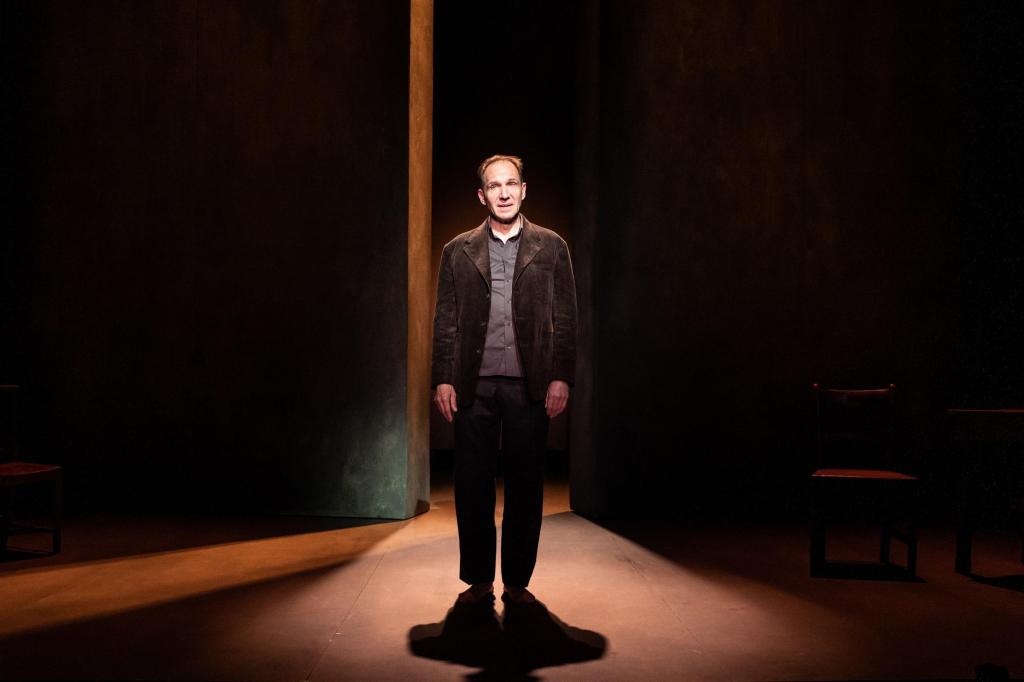
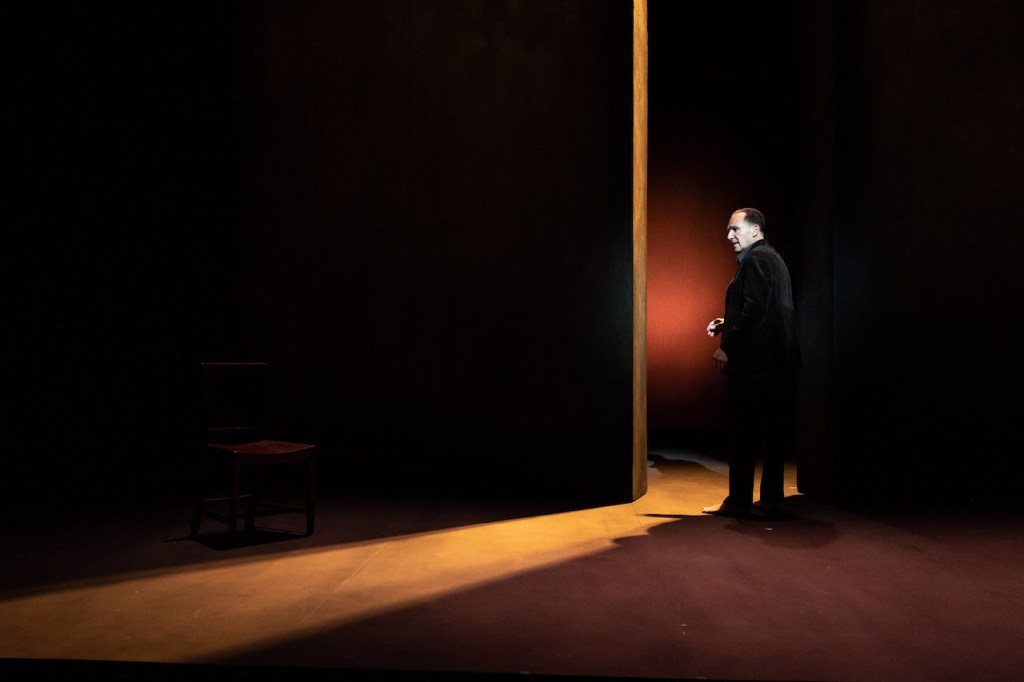
Given Fiennes’ apparent sincerity, I am sure that he has many insightful readings of Eliot’s text which I would be curious to read were he to essay his thoughts. Yet on stage, Fiennes’ own ideas remain largely opaque – which Eliot’s are also elusive. Instead, what we get is a generalised sense of profundity – with Fiennes small and barefoot beneath the two hulking stone monoliths behind him, designed by Hildegard Bechtler – combined with a general tendency to literalise the text in performance. In ‘East Coker’, the speaker’s simile ‘As, in a theatre, / The lights are extinguished, for the scene to be changed’ is dramatized by the dimming of the house lights into complete darkness. During ‘Burnt Norton’, Fiennes sits at the end of a stanza, before beginning the next: ‘Descend lower’. He duly sits cross-legged on the floor. Elsewhere, he dances. The description of ‘this twittering world’ that we inhabit draws laughter – but the joke is coincidental, an instance of accidental foresight rather than textual revelation.

Ralph Fiennes in Four Quartets

This production is the outcome of Fiennes’ lockdown endeavours – and the work is tinged by it, as its last three poems are by the toll of World War Two and the bombing of London. Its quiet and uncertain, yet intense philosophy is in part Eliot’s response to contemporary crisis, and Fiennes finds similar connections to ours: a sense of time losing its meaning, the unknown path forward (where progress out of lockdown is reversed by new variants), and the sense that humans are tiny in the face of oblivion and nature. Yet the play rarely commits to a comparison, instead only implying similitude to our current situation.

I appreciated the experience of the play as a chance to encounter the poem anew – but wished that we could have been offered more of an interpretation of Four Quartets than just the well-performed, emotive, though sometimes-too-literal delivery Fiennes gives. Perhaps it is a limitation of the form, and its driving linearity, which bends the text into a somewhat new shape. Some will be awed by it, and arguably that is part of the point; after all, Four Quartets is in part about feeling small when considering timelessness and the divine. Others, though, will feel like they’re eating their greens – in much the same way as some Shakespeare-viewers may feel. I enjoyed Fiennes’ production as an evening in the company of an enthusiast, sharing his delight in something to which I was almost already converted. I was not convinced, however, that the emotions of the text had been truly mined – instead only grafted on, while the text was spoken to us, rather than revealed.

Four Quartets

Written by T.S. Eliot, Performed and Directed by Ralph Fiennes, Designed by Hildegard Bechtler, Lighting Design by Tim Lutkin, Sound Design by Christopher Shutt, Assistant Directed by Eva Sampson, Movement by Fin Walker.
Reviewed 2nd December 2021